
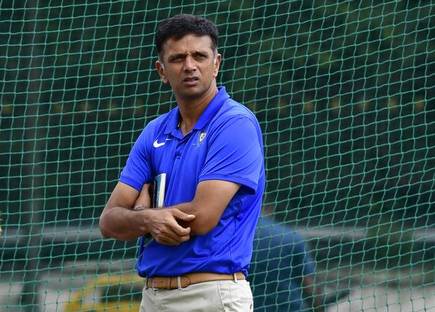

Former India head coach and batting legend Rahul Dravid believes increasingly flat pitches in T20 cricket are making life extremely difficult for bowlers and has called for more challenging surfaces to restore balance in the game.
Speaking during an interaction from Dublin, Dravid said the modern T20 game has tilted heavily in favour of batters, with bowlers needing additional support from conditions.
“In a sense, to see the quality of batting that has happened over the last two or three years, I think the bowlers in that format of the game will slowly have to do some catching up,” Dravid said.
“I think batsmanship and the ability to hit sixes and to access different parts of the ground has certainly improved leaps and bounds. Bowlers will have to keep working on their skills and keep developing. I am sure, some of them will be able to still stand out and hold their own,” he added.
With 200-plus totals becoming the norm in T20 cricket, Dravid believes bowlers will eventually evolve to meet the demands of the format. However, he also stressed the need for the pitches to offer bowlers more assistance.
“I think if you look at it in terms of balance, probably a lot more batsmen are able to cope with the requirements of the modern T20 game than, say, some of the bowlers have been able to at this point of time. That may change in two or three years,” said Dravid, who was the head coach when India won the 2024 T20 World Cup.
He urged authorities to prepare “more challenging wickets”.
“They may need a little bit of support and I think the way is probably to have a little more challenging wickets to ensure that there are something in it for the bowlers, whether it is the tracks that turn or whether it is a little bit more pace and bounce that give the bowlers a little bit more of a chance,” he said.
“Because I don’t think we can increase the size of the boundaries and already there is no space to go and increase the size of the boundaries,” he added.


